The 5:10 to the Jersey Shore
Train No. 733 left Exchange Place in Jersey City at 5:10 every weekday evening, heading for the Jersey Shore. Its regulars worked in the financial district, and they called it the Broker. On February 6, 1951, a K4 steam locomotive, No. 2445, was pulling eleven steel cars. By most accounts it was more crowded than ever, with people standing in the aisles.
A bridge that wasn't there that morning
New Jersey was building the Turnpike, and its route crossed the railroad just west of Woodbridge station. The two main tracks had to come out of service for months, so the Pennsylvania built a detour on temporary tracks to the north. To reach it, a train had to swing right and then left through two 5-degree curves. The second ended on a short, four-span wooden trestle over Legion Place.
There was no room to bank the curves properly: the outer rail sat just one inch higher than the inner. The approach fill rested on cinders rather than stone. The detour had been open for about four and a half hours.
A speed limit on paper
The speed there had always been 65 mph. Through the detour it would be 25. The railroad announced it the way it announced most things: in writing. General Order 1806 was issued on January 29 and took effect at 1:01 p.m. on February 6. Crews had to read it, carry it and remember it. No sign, flag or yellow light warned of the curve; on that division the rules didn't require one. The automatic signal before the bridge protected against other trains, not speed, and with the track clear it showed Proceed.
The engineer knew about the order and said he had talked it over with the conductor before leaving. But farther down the line, on the New York & Long Branch, speed limits were always marked with signs, and that was what he was used to looking for. According to the federal report, that habit led him to miss that between Union and Woodbridge there would be none.
Fifty on a curve built for twenty-five
The locomotive had no speedometer. The engineer believed he entered the detour at about 25 mph. Investigators, working from the wreckage, put it at about 50. They calculated the safe speed for that locomotive on that curve at 44. The tender left the rails first, struck the concrete abutment of the bridge and lost both trucks. The locomotive stayed upright for another 280 feet before it turned over. The first seven cars and part of the eighth came off behind it.
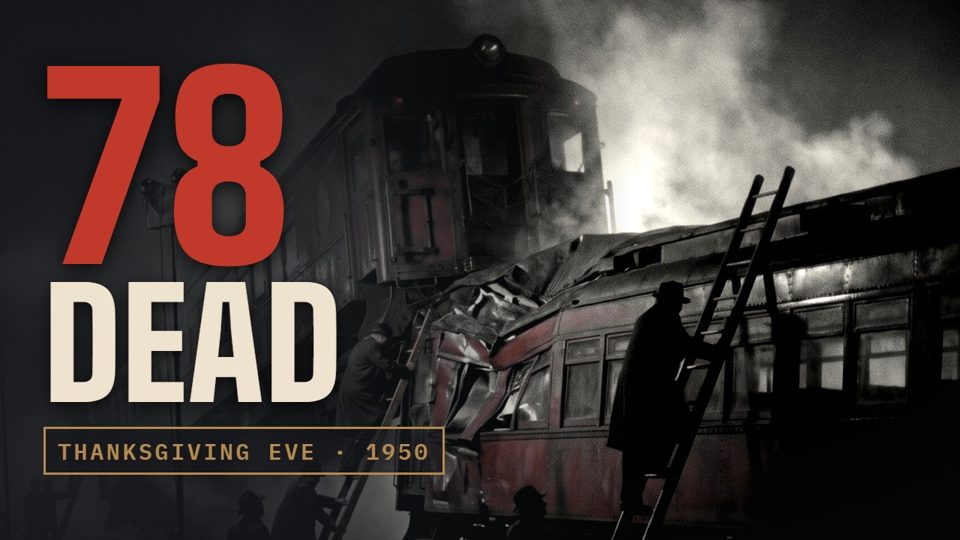
The fireman was killed. The ICC counted 83 passengers and one employee dead, 84 in all; the memorial in Woodbridge lists 85. It counted 350 injured; newspapers reported more than 500. It was the worst train wreck in the country since 1918. Neighbors opened their homes and shops to the injured, and doctors and nurses came from a nearby Army post.
What changed after Woodbridge
The ICC's conclusion was short: excessive speed on a curve of a temporary track. But it added that properly placed warning signs would be one more protection against a speed limit being ignored, and it recommended that the Pennsylvania install automatic train control on the division, a system that could stop a train by itself whether or not the engineer remembered the order. A man went too fast. He was working inside a system that put a new 25 mph curve, at night, behind a signal that said Proceed, and trusted a piece of paper for the rest.
Sources
Interstate Commerce Commission, Ex Parte No. 178, Accident at Woodbridge, N.J. (April 19, 1951). The full list of sources is in the description of the video. Read the original report below ↓